What Is Pelvic Obliquity — And Why Your Back Pain Might Start in Your Pelvis
Most people with chronic low back pain focus on the low back. That makes sense — it's where it hurts. But in many cases, the source of the problem isn't in the lumbar spine at all. It's lower. It's in the pelvis.
What Is Pelvic Obliquity?
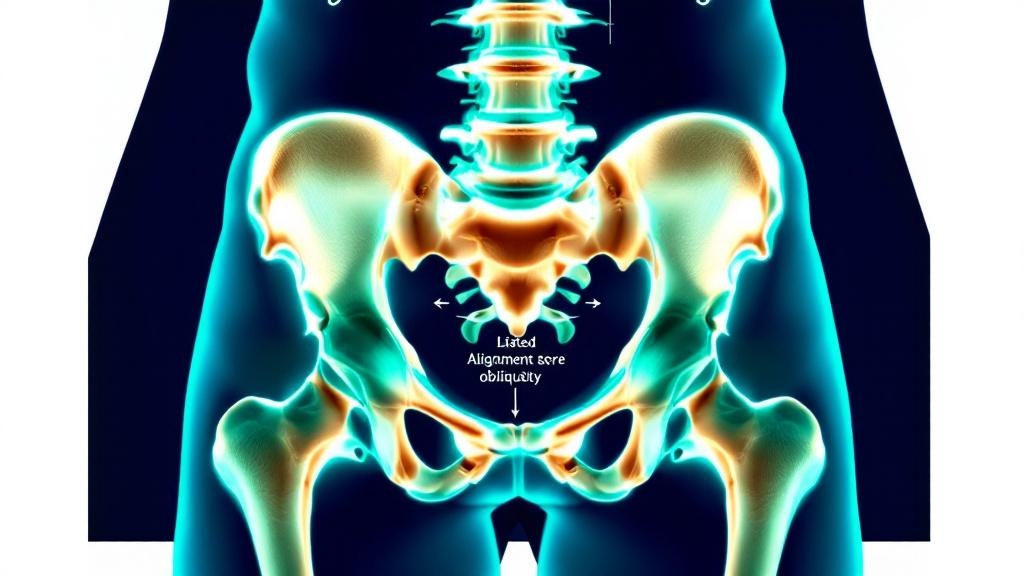
Pelvic obliquity is a condition where the pelvis is misaligned — tilted forward, backward, or laterally. This tilt changes the foundation everything else sits on. Your spine, your hips, your gait — all of it compensates for a pelvis that isn't level.
"The pelvis is misaligned for whatever reason — either secondary to tight muscles or weak muscles. As a result, there tends to be compression in areas where there shouldn't be compression."
— Dr. Hans Knopp, Hartford HealthCare interview
The misalignment typically develops from muscle imbalances. Tight hip flexors in the front of the body or tight hamstrings in the back can pull the pelvis out of its neutral position over time. This shift changes the way you walk, creates a functional leg-length discrepancy, and loads joints unevenly.
What Does It Feel Like?
Pelvic obliquity doesn't always announce itself as a pelvic problem. Patients typically present with:
- Low back pain — especially one-sided or resistant to standard treatment
- SI joint pain — deep ache in the buttock region near the sacroiliac joint
- Hip pain — one hip carrying more load than the other
- Leg-length discrepancy — one leg appears shorter (functional, not structural)
- Gait changes — limping, favoring one side, or compensating through the knee or ankle
Because the symptoms show up at the compensation sites rather than the source, many patients cycle through treatments that address the wrong problem — cortisone shots into the SI joint, physical therapy focused only on the low back, or imaging studies of the lumbar spine that look normal.
How Is It Diagnosed?
This is where osteopathic training matters. A standard orthopedic exam might check range of motion and order an MRI. An osteopathic evaluation looks at the entire musculoskeletal chain — from foot positioning through knee alignment, pelvic landmarks, spinal curvature, and shoulder level.
Dr. Knopp uses his hands as the primary diagnostic tool, palpating for asymmetry in the iliac crests, assessing muscle tone in the hip flexors and extensors, and testing sacral motion. This physical examination often reveals the tilt that imaging misses.
How Is It Treated?
The first-line treatment is osteopathic manipulative treatment (OMT). The goal is to restore pelvic alignment by releasing the tight muscles pulling it out of position and activating the weak muscles that should be stabilizing it.
Techniques may include:
- Muscle energy technique — the patient contracts specific muscles against resistance to reset muscle length and joint position
- Myofascial release — sustained pressure on restricted fascia to restore mobility
- HVLA thrust — the joint manipulation most people associate with "adjustment" (when appropriate)
- Counterstrain — positioning the body to relieve tender points and spasm
For cases that don't fully resolve with OMT alone, Dr. Knopp has additional tools through his hospital practice at Hartford HealthCare, including injection therapy and newer technologies like Sprint peripheral nerve stimulation — a medication-free approach that changes how pain nerves transmit signals to the brain.
The Bigger Point
Pelvic obliquity is treatable. But it requires someone who looks for it. A 15-minute visit focused on the low back alone will miss it. A whole-body evaluation that includes pelvic assessment will find it.
As Dr. Knopp puts it: the goal isn't just to treat the pain — it's to "improve your function — being able to do things that patients were able to do before."
Dealing with persistent back or hip pain?
Contact Dr. Knopp for an evaluation that looks beyond imaging.
Contact Dr. Knopp — $450 Initial Visit